Have you ever wondered just how close the International Space Station actually is, or how far away the Moon orbits? It's difficult to conceptualize these massive distances when just looking up at the night sky.
This entire visual breakdown is inspired by a brilliant physical demonstration from the YouTube channel PhysicsIsFun. Their YouTube Short perfectly visualizes the massive distances between our planet, its atmosphere, the ISS, and the Moon.
Full credit goes to them for this incredible physical model. I highly recommend watching their original video before reading the breakdown below!
The Baseline: An Exercise Ball
To understand the scale, we first need a baseline. In this demonstration, we are using a standard gym exercise ball to represent a physical Earth. This ball is exactly 0.67 meters (67 centimeters) in diameter.
For reference:
- Real Earth Diameter: ~12,700 kilometers
- Model Earth (Exercise Ball) Diameter: 0.67 meters
Using an ordinary exercise ball as our entire planet, let's take a look at the atmosphere, the ISS, and the Moon.
1. Atmosphere Thickness
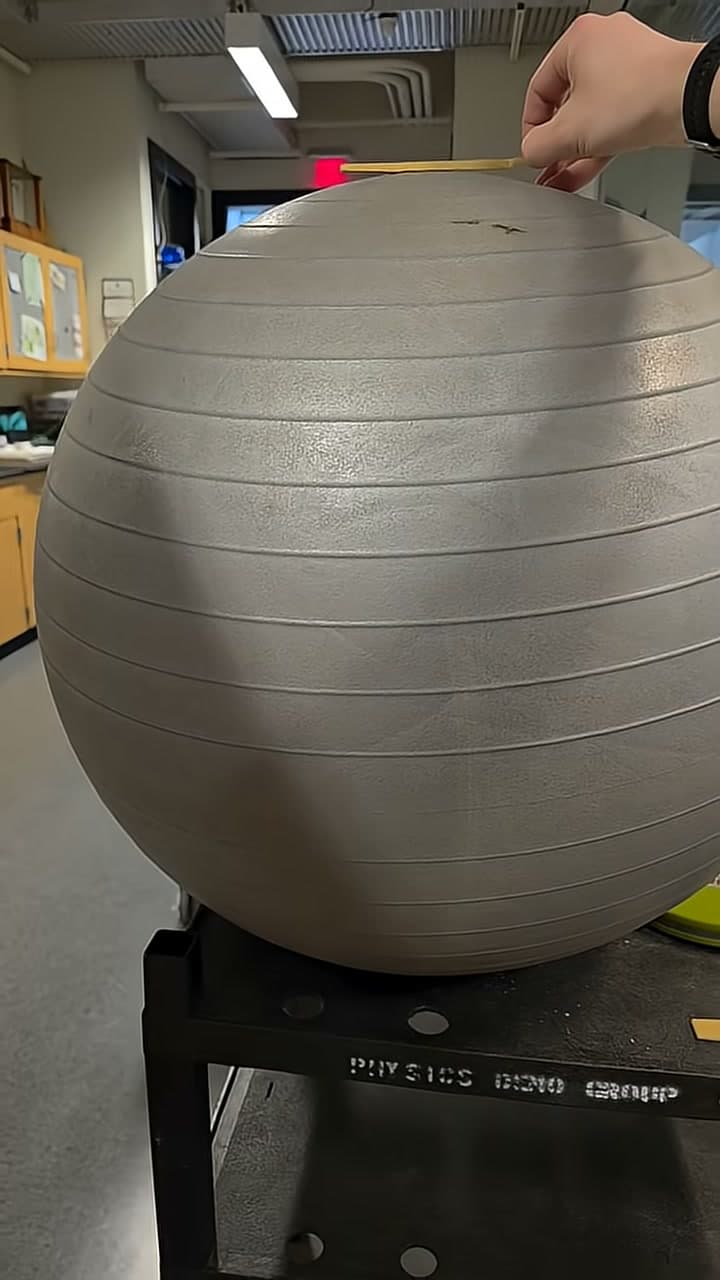
The Earth's atmosphere—the thin layer of gases that keeps us all alive—extends roughly 100 kilometers above the surface.
When applied to our 0.67-meter scale model, the atmosphere appears incredibly thin compared to the massive bulk of the entire planet.
2. The ISS Orbital Height
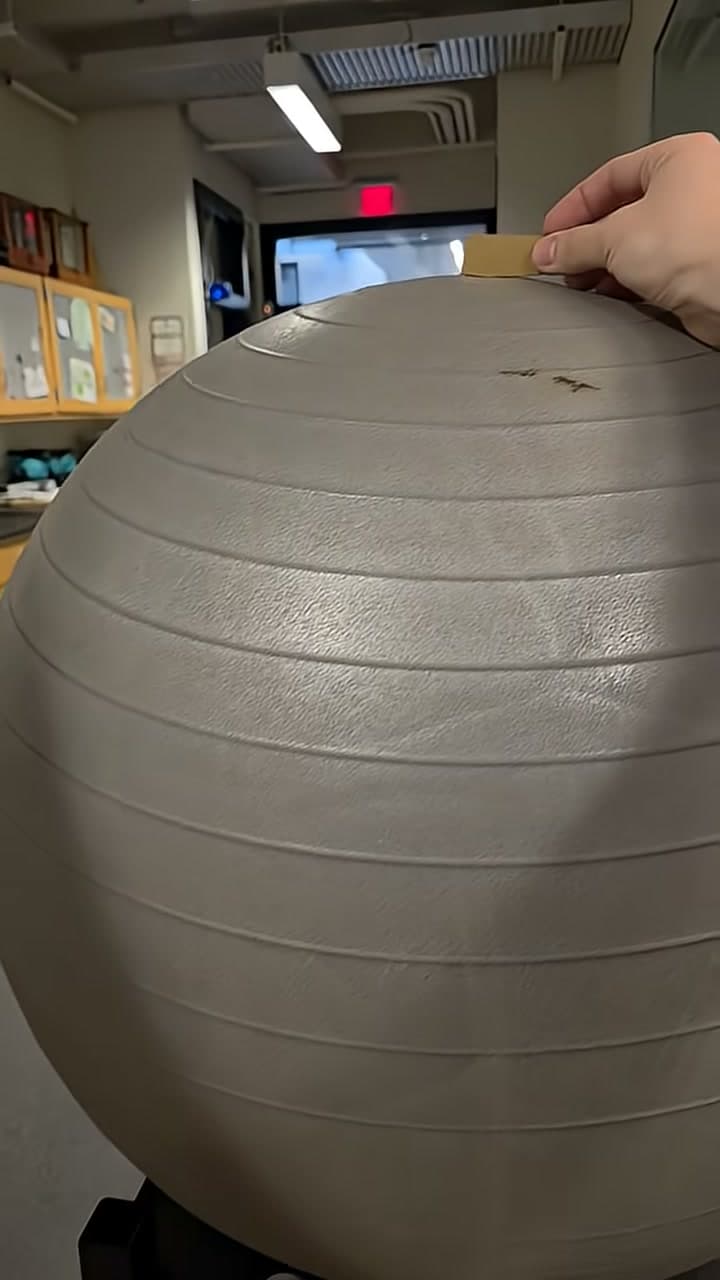
How high does the International Space Station orbit? The ISS circles in what is known as Low Earth Orbit (LEO), at an altitude of about 400 kilometers.
At our 0.67-meter scale, the ISS orbits just 2 centimeters above the surface of the model Earth.
This gives a profound visual understanding of why it's called Low Earth Orbit. The astronauts aboard the ISS are actually quite close to the planet's surface in the grand scheme of things!
3. Earth and Moon Size Comparison
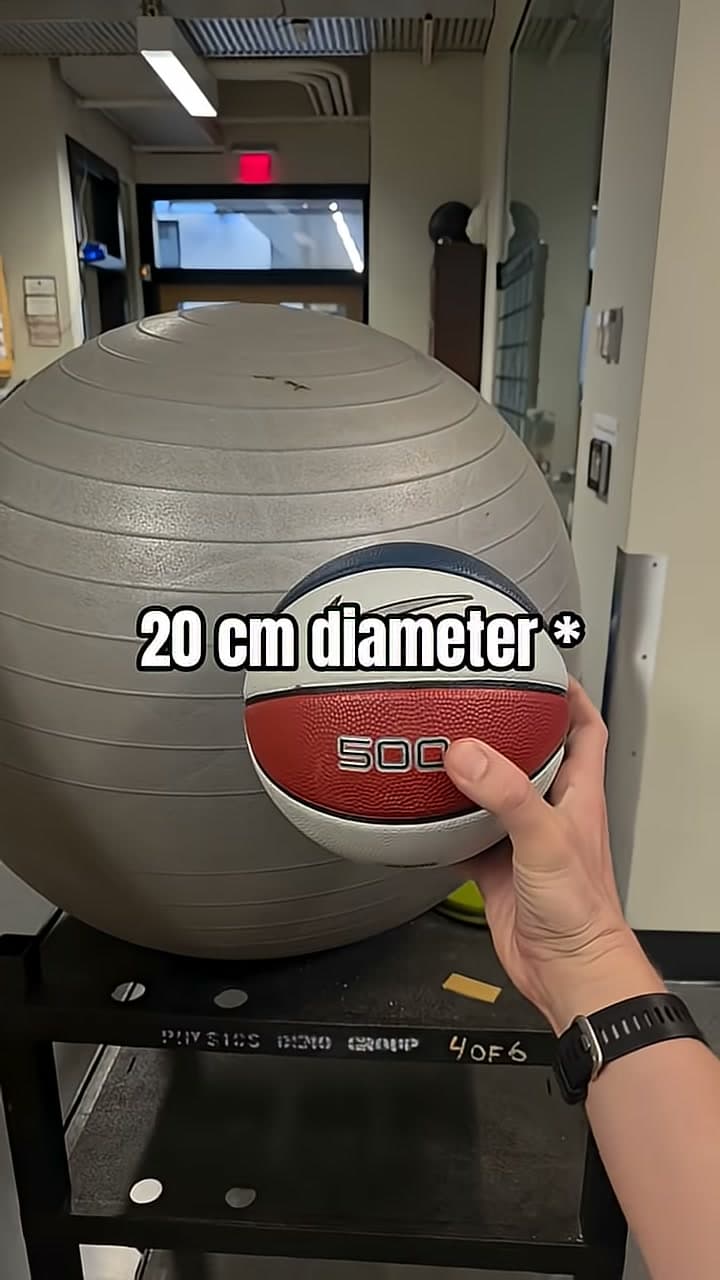
The Moon is much smaller than the Earth—specifically, it is about 3.7 times smaller in diameter.
To represent the Moon alongside our exercise ball Earth, we need a sphere that is just under 20 centimeters wide.
If we place our 20cm Moon next to our exercise ball Earth, the size difference looks like this:
4. The Massive Distance to the Moon
This is where our intuition often fails us. We tend to picture the Moon orbiting relatively close to the Earth, perhaps just a few Earth-widths away. The reality is quite different.
The gap between the Earth and the Moon is massive. In fact, you could fit about 30 Earths in the space between them.
Given our model scale where the Earth is 0.67 meters across, we would need to place the model Moon 20 meters away.
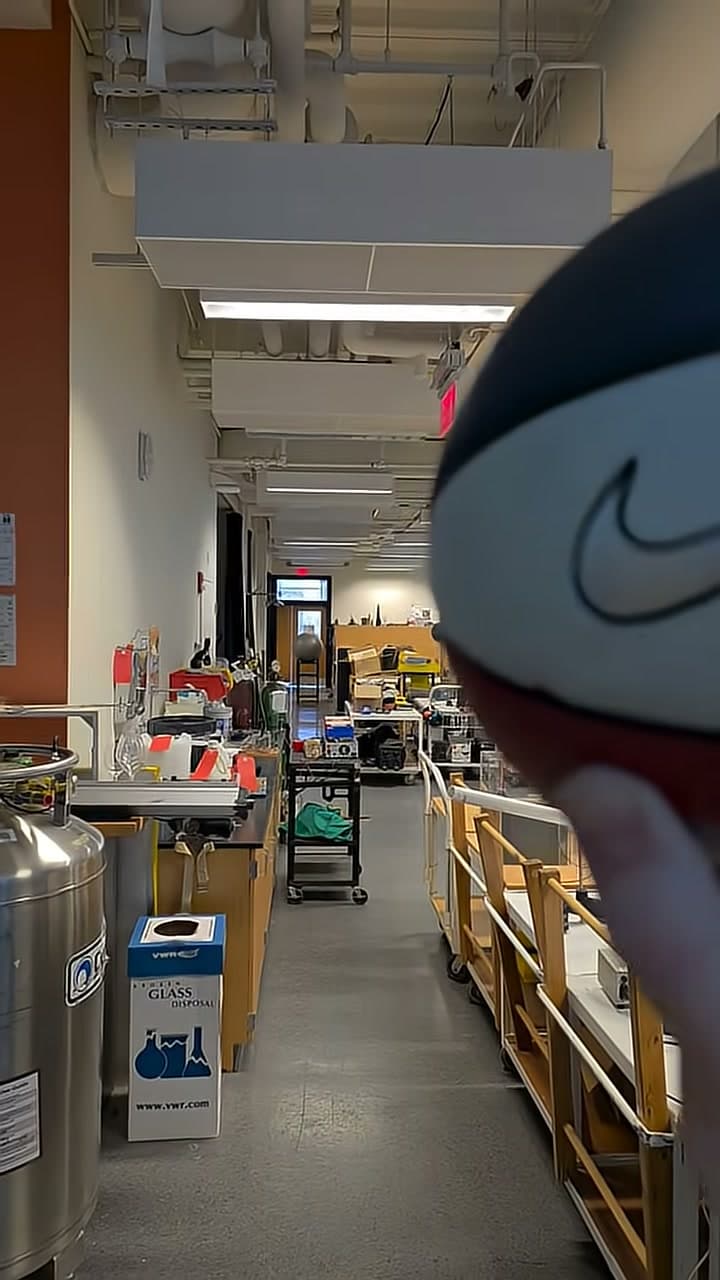
This truly gives you a sense of the huge difference between a low Earth orbit and the lunar orbit, and the incredible distance astronauts must travel when journeying to the Moon.